For one month every four years, humanity speaks a common language. It is not English, French, Spanish, Arabic, Mandarin, Portuguese, Kiswahili, or Quechua. It is football. Across Abya Yala, Turtle Island, Africa, SWANA (Southwest Asia and North Africa), Asia, Pasifika, the Caribbean, and countless Indigenous homelands that long predate the borders drawn by colonial powers, streets empty, families gather around televisions, children imitate their heroes with improvised balls, strangers embrace after dramatic goals, and entire nations share moments of collective joy and heartbreak.
Few cultural expressions transcend language, religion, politics, and geography as effortlessly as the beautiful game, whose simplicity has allowed it to travel across continents and generations, becoming part of the cultural fabric of communities far beyond the places where it first took root. At a time when the world often feels increasingly fragmented,football remains one of the last truly global cultural experiences capable of bringing billions of people together.
More Than a Sport
This is not an attempt to romanticize football or the institutions that govern it. Quite the opposite. FIFA has faced repeated corruption scandals and ongoing criticism over governance and transparency. Racism continues to stain stadiumsacross continents, while women’s football has had to fight for decades against structural sexism, unequal investment, and limited visibility. Sportswashing, the growing influence of betting companies, commercialization, and the concentration of wealth within a handful of elite clubs all raise legitimate concernsabout the direction of the modern game. These realities deserve scrutiny, and acknowledging them is essential if football is to become more equitable, inclusive, and accountable.
Yet reducing football to the failures of its institutions would be to misunderstand why it became humanity’s game in the first place. Long before broadcasting rights, billion-dollar sponsorships, transfer markets, or governing bodies transformed football into a global industry, it belonged to ordinary people. It belonged to neighborhoods before corporations, to communities before institutions, and to children long before celebrities. That is the football we celebrate.
Football’s Greatest Equalizer
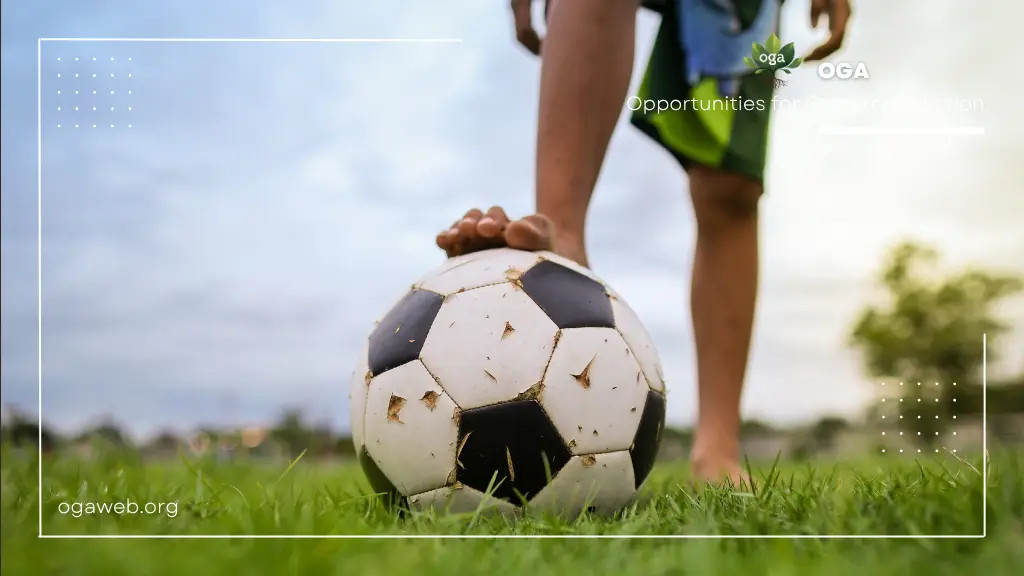
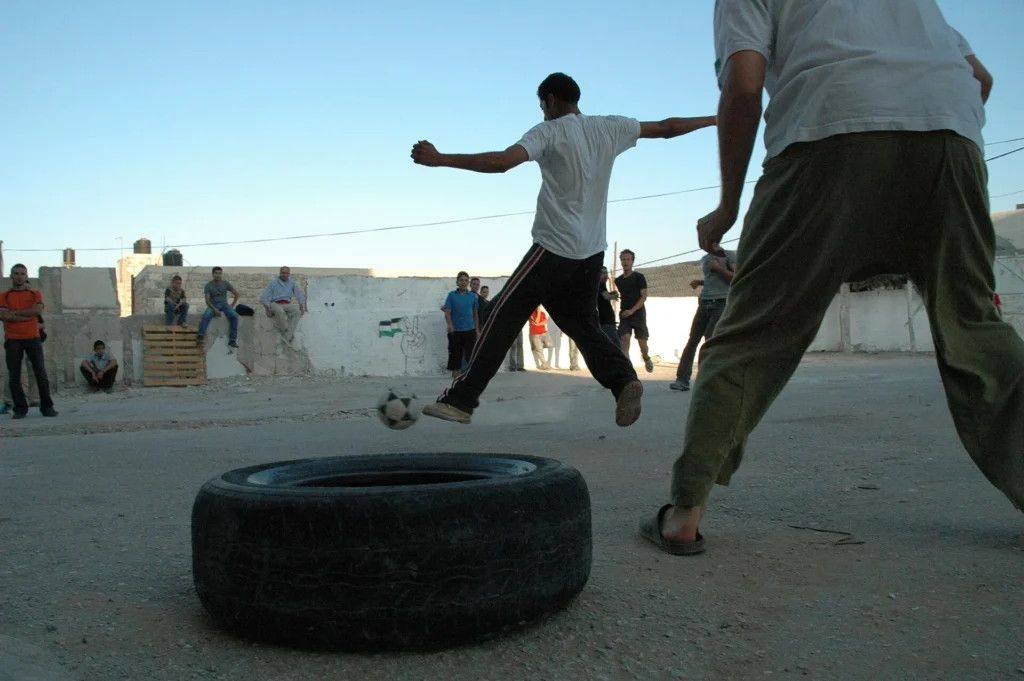
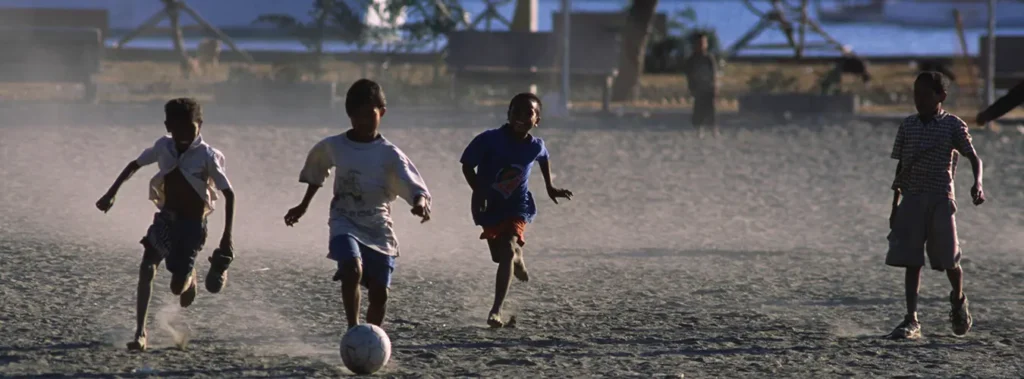
Unlike many sports, football asks remarkably little of those who wish to play it. It does not require expensive equipment, private clubs, specialized facilities, or significant financial resources. Sometimes a single ball is enough. Sometimes even that is unnecessary. Around the world, children have transformed bundles of cloth, rolled-up socks, plastic bottles, or handmade balls into invitations to play. A dusty road becomes a stadium. A beach becomes a training ground. An Indigenous territory, a refugee camp, a favela, or a village square becomes a place where extraordinary talent quietly begins to emerge.
This accessibility is revolutionary.It explains why football has become perhaps the world’s greatest sporting equalizer, reminding us that while opportunity remains profoundly unequal, talent, creativity, and imagination have never belonged exclusively to the wealthiest nations.
Football reminds us that:
- Human potential is universal, even when opportunity is not.
- Creativityhas never belonged exclusively to wealth or empire.
- Excellence flourishes in places too often described only through conflict, poverty, or crisis.
- Representation changes what future generations believe is possible.
- Joy itself can become an act of resistance.
Reclaiming a Colonial Legacy
Football travelled across the world through European colonial expansion, trade routes, missionaries, and military presence. Yet history has a remarkable tendency to transform what empire attempts to control. Communities throughout Pachamama did not merely adopt football; they reinvented it, infusing it with local cultures, rhythms, identities, and ways of seeing the world until it became something that no empire could truly own.
Nowhere is this transformation more visible than on football’s biggest stage. The 2026 FIFA World Cup has once again demonstrated that the beautiful game no longer revolves around a single continent. Morocco continues to inspire after rewriting history in 2022, proving that Global South football belongs among the world’s elite. Cape Verde captured hearts through the remarkable performances of goalkeeper Vozinha and a team representing one of Africa’s smallest island nations. Egypt,Ghana, Algeria, DR Congo, Jordan, Iraq, Haiti, Curaçao, Colombia, Brazil, and many others reminded millions of supporters that footballing excellence is not measured by GDP, military power, or colonial history.
For many of these nations, simply being seen matters. Global headlines too often mention them only during moments of war, humanitarian crises, migration, or political instability.Football offers another narrative: one centered on excellence, creativity, dignity, and collective pride.
The same is true for the players who have transformed the sport. Pelé and Marta changed the history of Brazilian football. George Weah inspired an entire continent before becoming President of Liberia. Mohamed Salah, Achraf Hakimi, Asisat Oshoala, Vinícius Júnior, Linda Caicedo, Son Heung-min, Sadio Mané, Khadija Shaw, and countless others remind us that football’s greatest artists increasingly emerge from communities that have long been marginalized within global conversations.
Beyond the Trophy
It is likely another traditional football powerhouse, many of them former colonial powers with centuries of accumulated wealth and well-established sporting institutions, will ultimately lift the trophy.Debates about controversial refereeing decisions, racism,betting interests, commercialization, inequality, and FIFA’s governance will continue long after the final whistle.
We do not ignore those realities, nor do we believe they should be softened. Loving football also means demanding more from the institutions that govern it.
But that is not the victory we are celebrating here.
We celebrate the children kicking a ball through the streets of Dakar, Recife, Ramallah, Dhaka, Praia, Bogotá, and countless other places where imagination has always been richer than resources. We celebrate Indigenous tournaments across Abya Yala and Turtle Island, community clubs throughout Africa,neighborhood pitches across SWANA, schoolyards in Asia, beaches in Aotearoa, and every space where football becomes a language of belonging rather than exclusion.
We celebrate the Bangladeshi families who fill their neighborhoods with Brazilian flags every World Cup, reminding us that football creates emotional bonds that transcend geography. We celebrate Palestinian children who continue to find moments of joy through football despite unimaginable hardship and genocide, demonstrating that play, hope, and community can survive even in the darkest circumstances. We celebrate Cape Verde, whose extraordinary journey introduced millions of people to an island nation too often overlooked on the global stage. We celebrate Morocco, whose achievements inspired an entire continent and the SWANA region to imagine new possibilities. We celebrate every community that continues to reclaim football from the institutions that profit from it.
Football cannot dismantle colonial legacies, end wars, eliminate racism, or reverse centuries of inequality. Yet it reminds us of something equally important: while power may still be concentrated, imagination has never been. While wealth remains unevenly distributed, talent has always been universal. While institutions continue to reflect historical inequalities, communities continue to reinvent the future.
And I can’t think of another sport where so many Black and Brown children can genuinely dream of being recognized for their talent, rather than their looks, family, passport, or background. Just look at Mohamed Salah, Vini Jr., or so many others. It’s easy to underestimate that when speaking from a place of privilege or without having experienced it firsthand in those countries. OGA is a grassroots initiative. We speak to that spirit, not to governments or institutions.
That is why, regardless of who ultimately lifts the trophy, this World Cup already belongs to the Global Majority. Because empires may have helped spread the game, but the people made it beautiful.
Want to get involved? Football has long been a vehicle for advancing human rights, peacebuilding, gender equality, refugee inclusion, disability rights, and community empowerment. Whether as a volunteer, supporter, researcher, or advocate, there are countless ways to help ensure the beautiful game lives up to its greatest potential.
Organizations to explore
⚽ streetfootballworld
A Global South-centered network supporting more than 100 organizations that use football to advance education, gender equality, refugee inclusion, youth leadership, and social change across Africa, Asia, Latin America, and beyond.
⚽ Football for Future
A movement mobilizing football for climate justice, sustainability, and community action.
⚽ Common Goal
A global collective of players, coaches, clubs, and organizations using football to advance equity, inclusion, and social impact.
⚽ Football Without Borders
Works with young people facing educational and social inequalities through football and mentoring.
⚽ FARE Network (Football Against Racism in Europe)
One of the world’s leading anti-racism organizations in football, partnering with grassroots groups across Europe and neighboring regions to combat discrimination.
By: Anna Ferreira