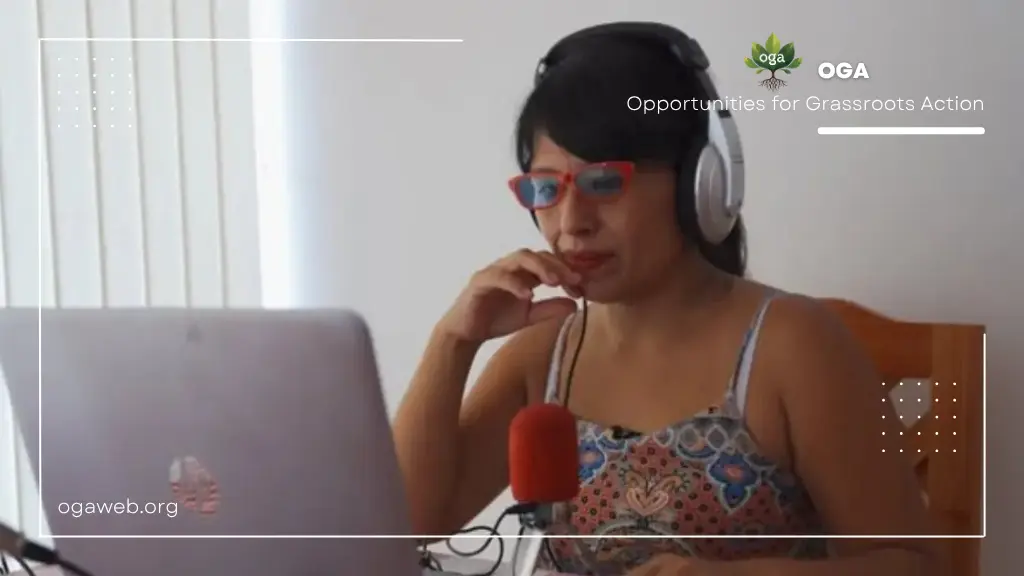
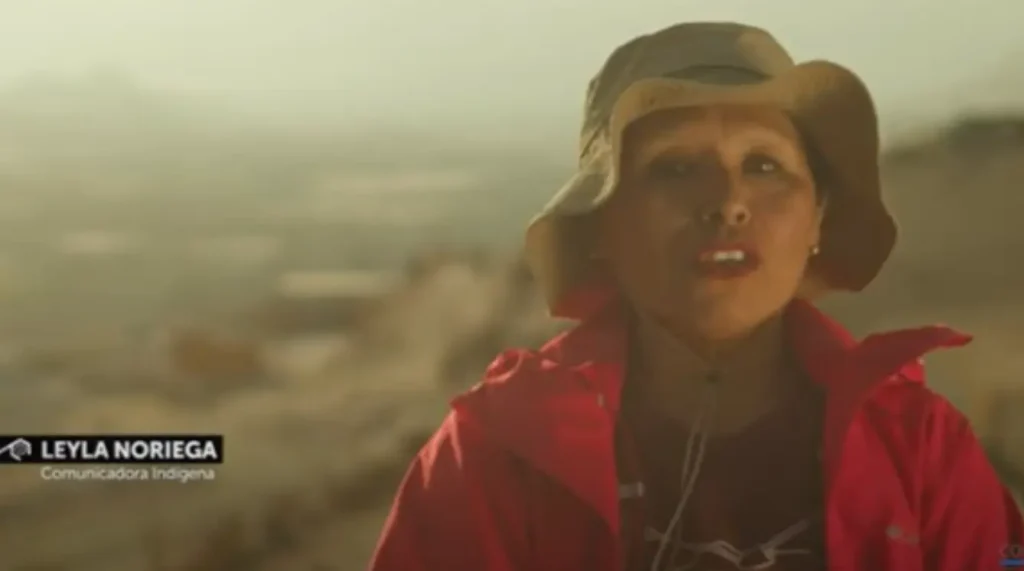
Video still sourced from Leyla’s Instagram.
Some people leave behind much more than their work.They leave behind a way of seeing the world, a talent for bringing people together, and a gift for making others feel that their voices matter. Leyla Noriega is one of those people.
Leyla is an Aymara journalist, community communicator, activist, mother, and defender of the Andean territories she calls home. From Arica and Belén, she understands journalism not simply as a profession, but as a form of service and connection. Her work is rooted in people, territory, memory, culture, and the conviction that communication can help communities organize, defend themselves, and imagine different futures.
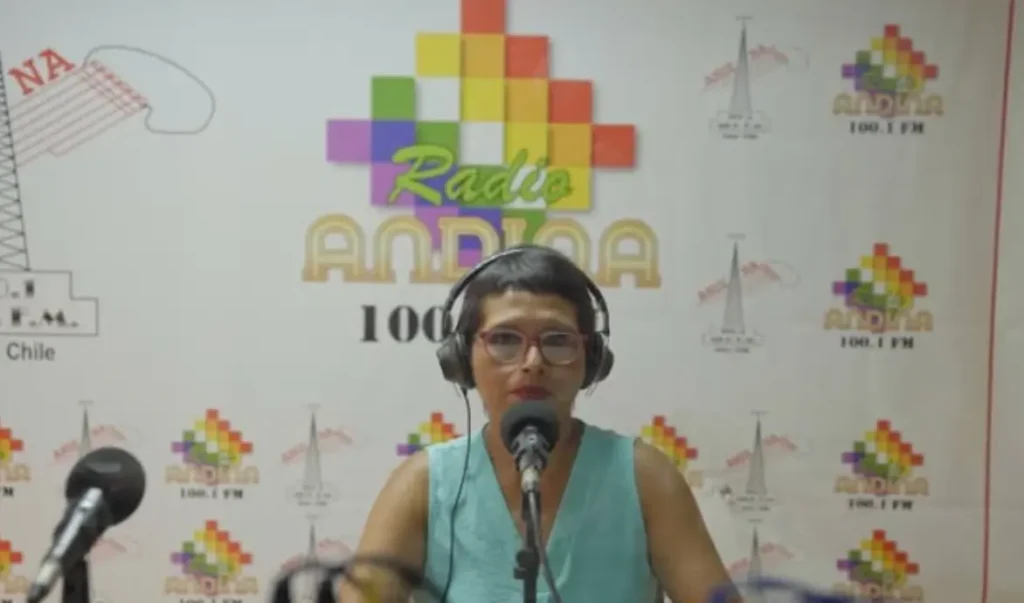
As co-founder and co-director of Radio AYNI, a collective initiative, Leyla has built a space where those things come together. Through the radio and her wider communication work, she amplifies Indigenous voices, covers human rights and environmental struggles, supports the revitalization of Aymara language and culture, and connects local stories with wider movements for justice. Her Mujeres de Pueblos Originarios y Memorias project, for example, brings the stories and memories of Indigenous women from Arica and Parinacota into community media.Leyla was responsible for the project’s scripts, interviews, and narration.
AYNI, a concept associated with reciprocity and mutual support, is not simply the name of the radio. It captures something fundamental about how Leyla and her partners work: with others, for others, and always with a sense of community. Radio AYNI’s own motto, “Hacemos radio, hacemos AYNI,” reflects that approach. Its work centers Indigenous peoples, communities, territories, and diverse identities through communication grounded in human rights and freedom of expression.
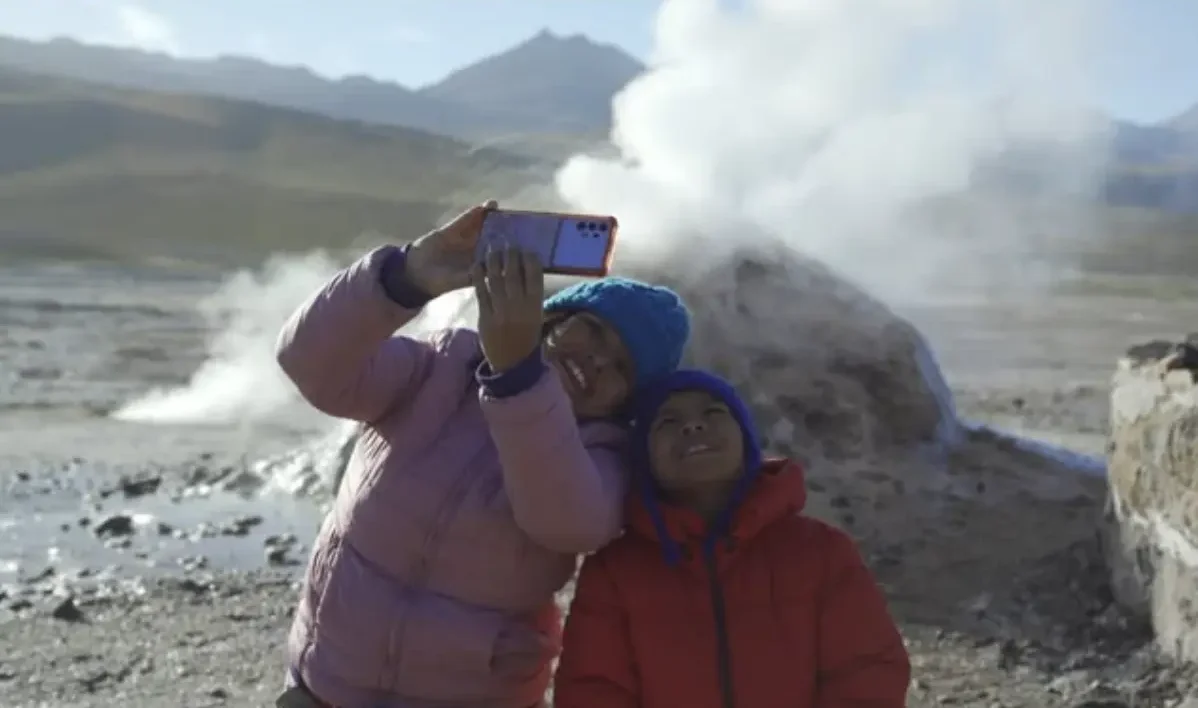
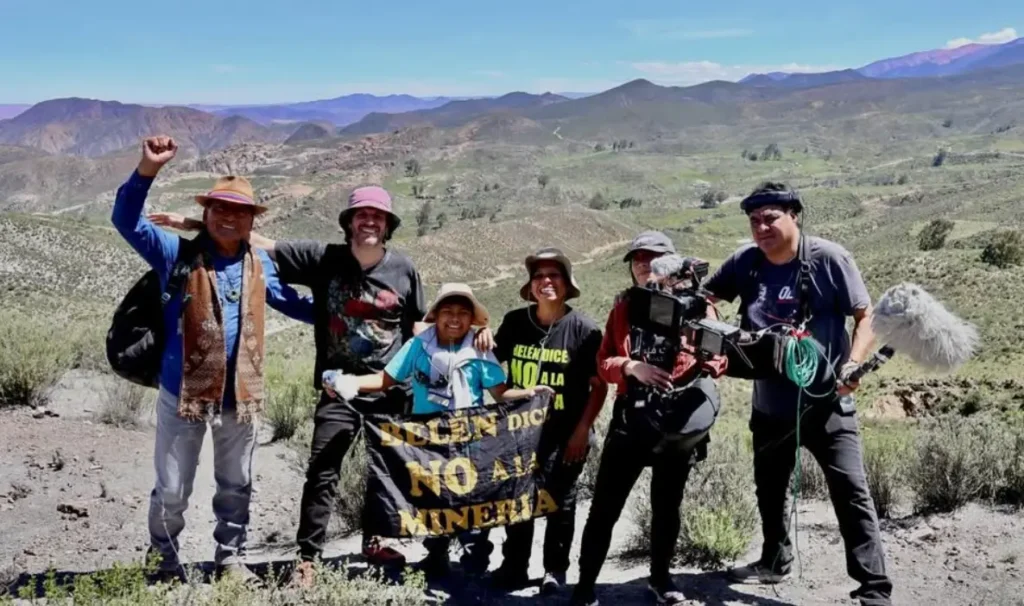
Her activism is inseparable from the territory. Leyla understands that defending land and water is also about defending culture, memory, identity, and the right of Indigenous communities to decide what happens to their own homes. Her connection to Belén and the surrounding Andean territory is not an abstract environmental commitment. It is personal, lived, and deeply rooted in the people around her. Her work with the Belén community’s resistance to mining is one example of that connection.
That is part of what makes All We Have Is Us so meaningful. Directed by Aline Juárez and Juan Francisco Donoso, the documentary brings together stories of communities confronting extractive projects and defending their territories.
The film’s journey began through a wider web of connections. Aline and Juan first connected with Leyla through Ramón Balcázar, the documentary’s other protagonist, whose work focuses on the defense of Andean wetlands. He also helped connect the struggles in Chile and Serbia through the Yes to Life, No to Mining network. Leyla then welcomed Aline and Juan into her home in Belén and trusted them with the story of her community.
The filmmakers went on to describe how the story came together. What they encountered was not simply resistance, but belonging, relationships, and the determination to protect a way of life.
At OGA, we were deeply honored to contribute to the documentary through Language for Justice,our initiative connecting language professionals with social impact projects. For us, this collaboration was about more than making a film available in different languages. It was about helping Leyla’s voice, and the voices of the communities represented in the film, cross borders without losing the people and places at the heart of their stories.
That work was made possible by an extraordinary group of volunteer linguistswho generously gave their time and expertise:
Alex Popa (English), Natalia Estrada (Spanish), Jana Groeger (German), Belkiss Issufo (Portuguese), Gaëlle Durbuis (French), Claudia Calsin Pacompia (Quechua), and the Serbian trio, Miona Janković, Marija Cvijetić, and Jelena Adamović, who contributed through translation, subtitling, and SDH.
Contributed entirely pro bono, this would represent an estimated market value of over $11,000. But what these linguists offered has no price: they gave their time, care, and skill so that Leyla’s voice, and the voices of her community, could cross borders.
We are deeply grateful to every one of them, as well as to Aline and Juan for trusting us with this part of the journey, and to Formando Rutas, Red Leaves Films, and everyone who helped bring the film to life.
Leyla passed away on December 29, 2025.It is difficult to write about her without feeling the weight of that sentence, but it is not where her story belongs. Leyla’s lifewas full of movement, relationships, ideas, work, laughter, struggle, and love. She was a mother to Elías, a daughter to Ube and Manuel, partner to Dante, a colleague and friend, a communicator, and a woman who chose to put her skills in service of her community.Tributes to Leyla’s life and work continue to reflect the impact she had on community communication and the people around her.
What she built continues through the people she accompanied and amplified, through the territory she worked to defend, and through the documentary that now carries her storyto audiences she may never have met. It continues through Elías and her family, through her community, and through all the people who are still touched by her work. Radio AYNI‘s work, including its Mujeres de Pueblos Originarios y Memorias project, remains part of that legacy.
This is also why language justice matters to us. A story does not stop belonging to a community when it crosses a border. It should be able to travel without being stripped of its context, its dignity, or the voices of the people who lived it. Translation, subtitling, and interpretation can create those pathways, allowing stories to meet new audiences while remaining grounded in where they come from.
We are grateful that Leyla trusted this story to be told, and that we had the opportunity to help it travel. We are grateful to everyone who continuesto carry her work, her values, and her memory forward.
Leyla’s voice is still echoing. And we are honored to help carry it.
Note: This piece is part of OGA Voices, a series sharing stories, perspectives, and reflections connected to the people and communities we work alongside. It was written as a tribute to Leyla Noriegaand reflects publicly available sources, our collaboration on All We Have Is Us, and our own experience working with the film.