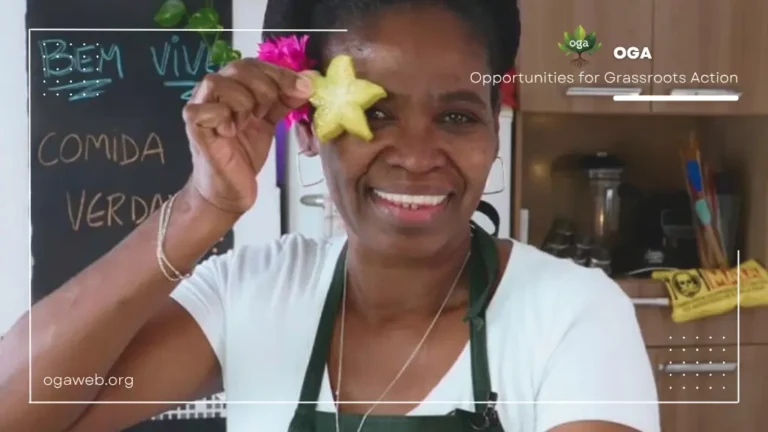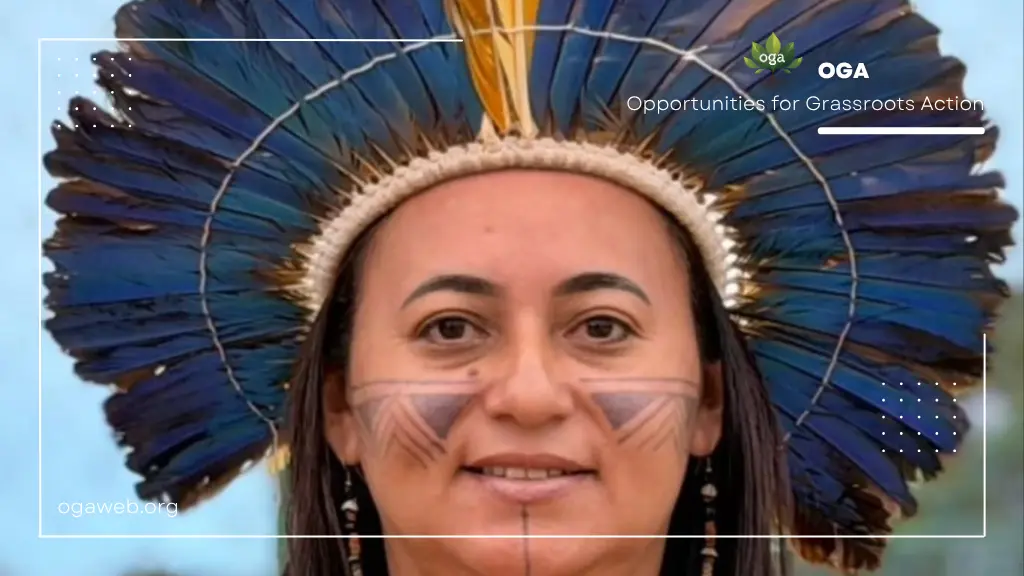
Cleidiane Tremembé doesn’t just teach math. She redefines what it means to learn.
A teacher from the Tremembé indigenous peoples, her approach is rooted in a vision in which education, territory, memory, and the body are inseparable. Knowledge is not something that comes from outside. It arises from the living relationship between community, ancestry, and daily life.
Indigenous education and mathematics as living knowledge
In Indigenous contexts, teaching has never been merely about conveying information. It is about sustaining continuity, strengthening bonds, and ensuring that learning is meaningful for life.
Cleidiane’s work breaks down the artificial divide between traditional and scientific knowledge. Counting, measuring, organizing, and observing patterns have always been part of the lives of Indigenous peoples. Mathematics already existed as a practice before it was designated as a discipline.
This shift raises profound questions about educational models that have historically established a hierarchy of knowledge and silenced indigenous epistemologies.
Territory, care, and social organization
Cleidiane’s work is centered on passing on the knowledge that sustains community life, including practices related to the land, food, and care.
In many aspects of the Tremembé ways of life, women play a prominent role in community, education, and the preservation of traditional knowledge. This central role of women directly influences how people learn and teach, as well as what is considered legitimate knowledge.
A Roundtable Discussion: Meeting with OGA and Indique
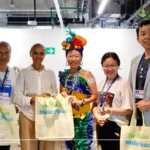
Last week, Cleidiane took part in a roundtable discussion hosted by OGA, co-organized with Indique, alongside other initiatives such as the Aldeia Verde Institute and the Guardians of Good Living project.
It was a space for listening and sharing among women from different regions, where knowledge circulated as a living practice, not as an abstract concept.
These gatherings are part of a broader movement: amplifying voices that have historically been marginalized but continue to champion alternative ways of living, learning, and resisting.
Education as Resistance and Transformation
Teaching rooted in the local context is a political act. It means rejecting standardized models that disregard context, language, and culture.
Cleidianeisn’t just “including” her community in an existing system. She is helping to transform it. Her presence also broadens the range of possibilities for indigenous girls and young women in fields such as mathematics, where a lack of representation remains a structural issue.
Why does this matter beyond indigenous peoples?
When education ceases to be a tool for assimilation and becomes a space for self-expression, something shifts.
Not just for indigenous peoples, but for any society that wants to learn in a way that is more equitable, inclusive, and connected to life.
OGA Voices
OGA Voices 🗣️ is an initiative by OGA 🌿 dedicated to recovering, listening to, and amplifying knowledge that has historically been marginalized by formal systems of knowledge.
It is not a matter of “giving a voice,” but of recognizing that these voices have always existed, have always produced knowledge, and have always sustained ways of life. What has often been denied is the right to be heard and recognized.
The proposal is both simple and demanding: to shift the focus.
And to make room for epistemologies that are already here, but are not always recognized as knowledge.
Continue amplifying the voices of those on the margins
This text is part of an ongoing series by OGA Voices dedicated to expanding the narratives, practices, and knowledge that underpin other possible futures.
How to go deeper and provide support
- Follow Cleidiane on social media: @cleidianematematica on Instagram
- Listen directly to indigenous voices, without excessive mediation
- Support educational projects led by indigenous peoples
- Incorporating Indigenous epistemologies into educational and institutional practices
- Recognize Indigenous women as producers of knowledge, not merely “cultural sources”
Food for thought
- Who decides what constitutes valid knowledge?
- What did your education teach you to ignore?
- What other ways of learning have you not yet discovered?
Cleidiane, our gratitude for supporting and sharing approaches that broaden our understanding of what it means to learn and teach.