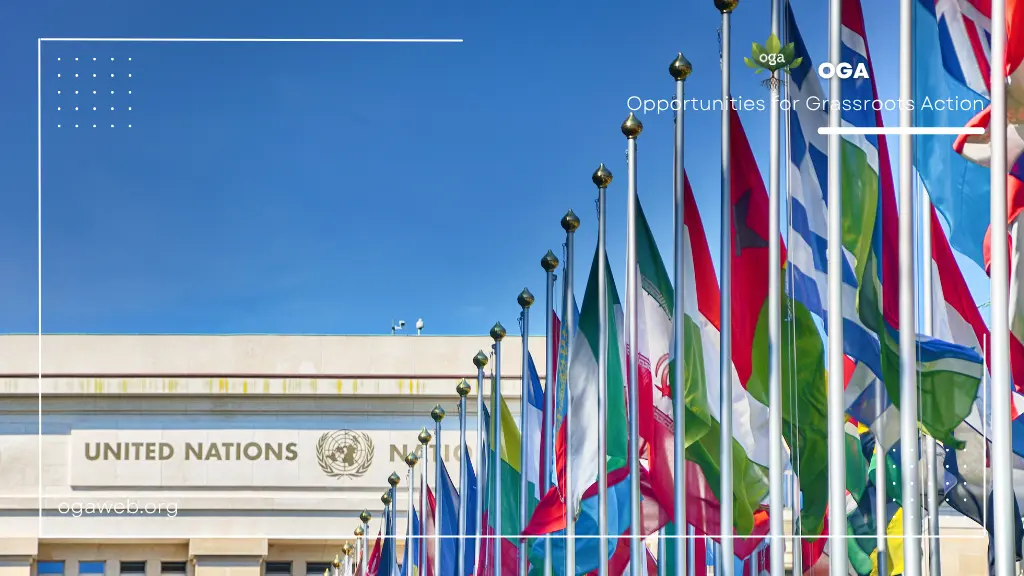
The United Nations Security Council was designed in 1945 to maintain international peace and security.Its five permanent members, the United States, Russia, China, the United Kingdom, and France, were granted veto power as a reward for victory in World War II and as a guarantee that no major power would be forced into action against its will.
Eighty years later, that structure has become a mechanism for paralysis.
Between October 2023 and June 2025 alone, the United States vetoed five Security Council resolutions calling for ceasefires in Gaza. Russia and China vetoed two others. In each case, the rest of the council, including the UK and France, voted in favor. The world watched as the body charged with preventing atrocity stood frozen.
The Unrepresentative Five
The veto was always an undemocratic tool.But today, its defenders can no longer claim it reflects global power. As UN Secretary General António Guterres put it bluntly in 2025, the Security Council represents the world of 1945, with three European members, one Asian, and the United States, and no permanent seats for Africa or Latin America.
Brazilian President Luiz Inácio Lula da Silva has been one of the most vocal critics of this imbalance. In a speech at the UN General Assembly in September 2025, Lula declared: “The Security Council has lost its credibility. It is unacceptable that a single country can block the will of the overwhelming majority of the international community. The veto power must be reformed, and the Global South must have a permanent voice in this body.” Lula has repeatedly called for Brazil to have a permanent seat, along with other emerging economies, arguing that the current structure perpetuates a colonial logic that no longer reflects global realities.
The African Union has made this its central demand: permanent seats for the continent, with full veto power. “Africa is not asking for charity,” the AU representative stated in 2025. “We are asking for the seat that has been denied to us for eighty years.” The G20 nations have similarly called for India, Brazil, Japan, and Germany to join an expanded permanent membership.
A Pattern of Inaction
The veto has not merely blocked action on Gaza. It has shielded Russia’s war in Ukraine, enabled the Sudanese government’s offensives, and allowed atrocities in Myanmar to continue without meaningful Security Council intervention.
The Reform Proposals
The debate over veto reform has shifted from abstract to urgent. Several proposals are now on the table:
Abolish the Veto Entirely. A coalition of countries including Spain, Slovenia, and Vietnam has called for eliminating the veto power altogether, arguing that no single country should have the ability to override the will of the international community.
Limit Veto Use in Mass Atrocities. The ACT Group, which includes more than 120 countries, has called on the P5 to voluntarily refrain from using the veto in cases of genocide, war crimes, and crimes against humanity. France and Mexico have proposed a formal code of conduct to make this binding.
Add New Permanent Members. The African Union and G20 nations have pushed for expanding permanent membership to include Africa, Latin America, and major emerging economies. Brazil, India, Japan, and Germany are the most frequently mentioned candidates.
Create New Elected Seats. The Uniting for Consensus Group, which includes Italy, Spain, and others, has proposed expanding only non permanent elected seats, making the council more democratic without granting new veto powers.
General Assembly Override. Slovenia and the Global Governance Forum have proposed allowing the General Assembly to override a Security Council veto with a two thirds majority, creating a check on the veto power that does not require amending the UN Charter.
Why Reform Hasn’t Happened
The system creates a built in paradox: the five countries who would have to approve any change are the same ones who benefit from the current structure. While there is broad international support for reform, amending the UN Charter requires approval by two thirds of the General Assembly and ratification by all five permanent members. Any of them can block changes.
The November 2025 Security Council Resolution 2803, which authorized an International Stabilization Force in Gaza and set a conditional pathway to Palestinian statehood, passed with 13 votes in favor and no veto. It was a rare moment of consensus, but it also revealed how much is possible when the permanent members choose not to obstruct. The question is whether reform can happen before the next crisis demands action.
Why OGA Supports Reform
At OGA, we believe that global governance structures must reflect the people they claim to serve. The current Security Council was designed by and for the victors of a war that ended eighty years ago. It systematically excludes the voices of the Global South, of Africa, of Indigenous peoples, of the communities most impacted by the conflicts it fails to resolve.
We support UN Security Council reform because we believe in accountability, in collective decision making, and in the principle that no single country should have the power to block justice. The veto, as it stands, is a tool of impunity. Reforming it is not just a technical matter. It is a matter of whether the international community is serious about peace, human rights, and the dignity of all peoples.
A Note on Our Engagement
As a global majority platform, we are also mindful of how we engage with the content we consume and share. The stories, voices, and causes we amplify shape the narratives that move the world. We choose to follow, uplift, and engage with content that is truthful, accountable, and rooted in justice.
We also choose to unfollow and not share content that is harmful, dehumanizing, or that grants visibility to those who perpetuate violence and oppression.The people who suffer under these systems do not owe us their trauma. The stories that deserve our attention are those that build understanding, that center dignity, and that point toward liberation.
We invite you to do the same. Curate your feeds. Protect your peace. And when you engage, do so with intention.
By: Anna Ferreira