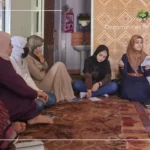
In our ongoing commitment to amplifying voices from the frontlines of history, we are honored to share this personal narrative by Sahar Kishta.
At OGA, we believe in the power of authentic storytelling and maintain a strict policy of not changing or editing the ideas of our contributors, ensuring their message remains exactly as intended. Sahar´s words offer a vital perspective on the human cost of ongoing genocide, moving beyond statistics to the heart of a home and a community that has defined her family for generations. She invites us into the vibrant past of the Qeshta neighborhood in Rafah, Palestine, contrasting it with a present defined by loss and a future fueled by the resilient hope of rebuilding.
By: Sahar Kishta
My favourite place in Rafah has always been the Qeshta neighborhood.My father came from a huge family — thirteen uncles and five aunts — and all of them lived next to each other. They built their homes close, floor upon floor, even marrying their sons to girls from within the same buildings, so love and laughter filled every corner.
My great-grandfather, who was known for his wild spirit, had married three times, and his children carried his boldness into the generations that followed. I didn’t live there, but every weekend my father would take my siblings and me to visit my grandparents in the Qeshta neighbourhood.
From the rooftop of my grandfather’s house, I could see Egypt — just there, beyond the horizon, so close that it felt like another part of our world. On Saturdays, the local market would pass right through our neighbourhood. Whatever your heart desired could be found there: colourful clothes, fresh fruits, toys, spices, and the endless noise of life.
The Present — A Vanished Neighbourhood
Now, the Qeshta neighbourhood no longer exists. It is called the Philadelphia Route — a name that feels foreign, stripped of the warmth and life it once held. Everything has been destroyed and decimated.
During the temporary ceasefire in February 2025, I tried to return, but the neighbourhood had become a “Red Zone,” an active military area forbidden to enter. Still, I went as close as I could. I stood on the rubble of what used to be my home, searching for a familiar sight — a wall, a tree, a corner I could recognize. But there was none — only silence and dust where laughter once lived.
I was devastated. As I tried to take in the destruction, an Israeli tank chased me away. I fled, carrying nothing but grief for a world that no longer exists.
I mourn my childhood memories, buried beneath the ruins of my ancestors’ houses — memories my children will never see, never touch, never know.
The Qeshta family, native to Rafah, had stood steadfast through everything — 1948, 1967, and every war that followed. We survived them all, until the genocide of 2023 tore us apart.
Now, we are uprooted, scattered, and the pain of losing our place — our belonging — is beyond words.
The Future
I dream of rebuilding the neighbourhood again.
I dream of letting my kids play with their cousins, and every Friday we all pray together in our mosque — Al Ansar mosque. But would that even be possible anymore?
We lost so many people.
Every family in this neighbourhood has lost at least one of its own.
And even if we managed to rebuild the houses, would those who died return?
Would their laughter ever be heard again?
Or will it remain a dream that never came true?
Sometimes I fear that my children will disperse into unknown lands, never knowing their own. And the Qeshta neighbourhood — the place that held all our lives together — will no longer exist except in the memories of those who have already passed.
To support Sahar, please follow her on:
Sahar’s dream of rebuilding is not just about physical structures, but about reclaiming the identity and continuity of the Qeshta family. Her story serves as a stark reminder that behind every headline of destruction are centuries of collective memory and the unbreakable spirit of a people determined to return.
OGA stands in solidarity with Sahar and all those who carry the heavy weight of their heritage amidst ruin.
We encourage our community to engage with her work and support her journey directly. Follow Sahar Kishta to ensure her voice continues to be heard.