The land, for the Palestinian people, is more than a means of subsistence; it is their very identity and the map of resistance. The connection with Al-Ard (the Land) is an ancestral heritage that the occupation systematically attempts to erase, through a project of land theft and resource control.
In this context of historical erasure, Permaculture emerges not just as an agricultural technique, but as a radical act of decolonization. It is the assertion that sovereignty over land, water, and seeds is the foundation of a free future.
The Green Nakba: The Context of Agro-Resistance
The Israeli military occupation operates a policy that attacks the ecological and agrarian fabric of Palestine. This is a process that activists call the Green Nakba: continuous confiscation of land for settlement expansion and total control over water resources.
In a region where water is politicized and militarized, the colonial model aims to replace ancestral agriculture with dependence on monocultures and imported products, turning the farmer into a mere consumer and severing their millennia-old connection to the soil.
Permaculture: An Ethical and Agro-Ecological Project
It is in this context of dispossession that Permaculture establishes itself as an ethical project of reconnection and autonomy.
The Concept
Permaculture is a design system based on three central ethics: Earth Care, People Care, and Fair Share. Unlike industrial agriculture, it seeks to create self-sustaining, resilient, and abundant systems by observing and imitating the patterns of nature.
In Palestine, the application of these principles is immediate and vital. Permacultural design teaches how to maximize productivity in minimized and marginalized spaces, build favorable microclimates, and, crucially, restore soil health and water retention capacity.
One of the pillars of this grassroots movement was the work of educators like Alice Grey and Alfred Decker. Alice introduced the first complete Permaculture Design Course (PDC) in Palestine, training local leaders to apply the techniques in besieged or threatened lands.
Sovereignty in Every Seed
The struggle for Palestinian Food Sovereignty manifests in practices such as:
- Water Management: Use of techniques like swales and cisterns for rainwater harvesting. This is an act of water autonomy that bypasses the control imposed by the settlements.
- Seed Bank: Projects like the Ancestral Seed Library of Palestine (led by Palestinian artist and researcher Vivien Sansour)protect and exchange ancestral heirloom seeds. By preserving biodiversity, Palestinians resist dependence on patented seeds and preserve the cultural memory of the land.
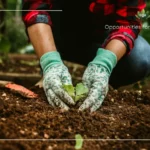
- Urban and Refugee Camp Growth: Permaculture allows for the creation of intensive gardens on rooftops or small backyards in refugee camps, transforming limited spaces into vital sources of nutrition.
The Link of Liberation
Permaculture is not just gardening; it is rooted activism. It is the direct opposite of the Terra Nulliusfiction that justifies the occupation, as every planted seed declares an entrenched presence and a claimed future. It echoes a universal sentiment of resistance.
Every act of planting a tree, of collecting water, of sharing a seed, is an act of non-violence and resistance. It is asserting: ‘I am here, and this land is alive.’ This affirmation of life and connection resonates deeply with our OGA purpose – to build a map that is honest, ancestral, and just.
Cultivation is the deepest form of resistance, and Permaculture is the map of a future where Palestine flourishes in its own sovereignty.
Call to Action: Support Agro-Resistance
Permaculture in Palestine is funded by activism and global solidarity. To support Palestinian sovereignty and rooting work:
- OGA Partnership: Learn about Permaculture & Palestine (PePa), a great OGA partner and a constant inspiration in our mission of justice and sovereignty.
- Sign the Declaration: Show your support for permacultural resistance by signing the Permaculture Movement Declaration.
- Community: Join the community on Telegram for action and learning.
- Seeds and Culture: Support the Ancestral Seed Library of Palestine and the mission of Vivien Sansour.
- Permaculture in Refugee Camps: Support vital initiatives for capacity building and sustainable food system design in refugee camps, such as Permaculture for Refugees.
- Permaculture Education: Learn about the work of Alfred Decker and the formation of Permaculture Teacher Trainings for practitioners from the Levant.
- Share: Spread this article and the importance of indigenous sovereignty and agroecology as forms of decolonial resistance.