Naming Complicity: The Global Web Behind the Gaza Genocide
In Gaza, entire generations are being erased while the world debates definitions.
Hospitals, homes, and schools reduced to dust. Children buried with no names left to call.
The air thick with grief — and the silence of those who could have stopped it.
A mirror of our time
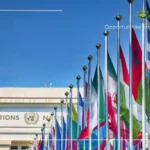
In her latest report to the United Nations General Assembly — A/80/492: “Gaza Genocide: A Collective Crime” — UN Special Rapporteur Francesca Albanese describes the atrocities unfolding in Gaza not as an isolated act, but as a collective crime, only made possible through decades of impunity, political protection, and the calculated erosion of international law.
According to Albanese, this genocide has been “enabled by the actions and inactions of powerful Third States” that have supplied weapons, diplomatic cover, and economic support to Israel’s system of occupation and apartheid.
Her report examines the diplomatic, military, economic, and so-called “humanitarian” dimensions of that support — and makes clear that many of these relationships could engage states’ responsibility under international law.
As per public UN records and official statements referenced in the Special Rapporteur’s report, many governments — including the United States, United Kingdom, Germany, Australia, New Zealand, Canada, several EU members, and most NATO-aligned states — continued military, diplomatic, or trade cooperation with Israel during the Gaza campaign.
Within Europe, Spain, Ireland, and Belgium have taken more independent positions supporting ceasefire and accountability measures.
We invite you to engage with the full report and source below:
🔗 Report of the Special Rapporteur on the situation of human rights in the Palestinian territories occupied since 1967 – A/80/492 (advance unedited version)
Voices of hope and accountability
And yet, amid this collapse of moral order, nations and movements are holding the line.
From the Global South, South Africa, Colombia, Nicaragua, Bangladesh, Bolivia, Jordan, Namibia, and members of The Hague Group (Comoros and Djibouti) have been among the governments calling for investigations and justice for Palestinians, bringing cases before the International Court of Justice (ICJ), demanding sanctions, and calling for an immediate and permanent ceasefire.
Their leadership reflects a deeper truth: that the Global South has long understood that justice cannot depend on proximity to power.
Beyond inclusion: toward justice
At OGA and DEI Declassified, we recognize this as a turning point for humanity.
For decades, diversity, equity, and inclusion have been spoken of as frameworks within institutions — yet what meaning can they hold if entire peoples are excluded from the right to live?
What kind of equity is possible while systems of racial domination are funded and excused?
True inclusion begins when we name complicity and dismantle the hierarchies that sustain it.
Justice begins when we center the people and movements who have always carried truth, even when ignored.
The knife-edge moment
“The world now stands on a knife-edge between the collapse of the international rule of law and hope for renewal.”
— Francesca Albanese, UN Special Rapporteur (A/80/492)
That renewal depends on all of us — collectives, networks, and ordinary people who refuse silence, who choose action over despair.
Join us
We invite those who believe in equity, regenerative justice, and decolonial care to join us — to collaborate, to share knowledge, and to build spaces of accountability and healing.
🤝🏾 Partner with 🌿 OGA 🌿 and DEI Declassified to co-create pathways of solidarity that bridge the Global South and North, and to reclaim the moral imagination our world so urgently needs.