In professional and leadership spaces, a curious and pervasive pattern often manifests among Global Majority (BIPOC) professionals: the seemingly paradoxical tendency to withdraw, self-sabotage, or step back just when granted the autonomy, trust, and opportunities they have earned.
While this behavior is frequently mislabeled as “imposter syndrome” (sic) — a term that individualizes a systemic problem—analysis suggests the root cause lies in a far deeper, inherited struggle: intergenerational and historical trauma.
Autonomy as an Unsafe Signal
For many individuals whose ancestors endured systemic oppression, chattel slavery, genocide, or colonization, the act of being fully visible, assertive, or autonomous was a profound threat to survival. Asserting personal will, resisting authority, or even expressing brilliance could trigger violence, punishment, or death.
This reality created a deep-seated survival mechanism—a “nervous system programming” passed down through generations—that conditioned the body to seek safety by staying small, people-pleasing, and avoiding visibility. Even when the external context shifts to a supportive, professional environment, the inherited biological and psychological response remains. When true, unmanaged autonomy is finally experienced, the nervous system registers it as unfamiliar and, consequently, unsafe.
The Cycle of Professional Trauma Re-Enactment
This inherited survival mechanism drives a specific pattern of professional self-sabotage that is often misread as a lack of capability or drive. Instead, it is a trauma response:
- The Unsafe Embrace of Power: Opportunities for empowerment or leadership feel intuitively dangerous, leading to withdrawal or freezing behavior rather than forward momentum.
- Rejecting Respect for Familiarity: Individuals may subconsciously seek out or gravitate toward workplace environments that are diminishing or actively managed, because the feeling of being policed or undervalued, however harmful, is psychologically familiar and therefore less anxiety-provoking than genuine, unfamiliar trust.
- Struggles with Self-Management: Receiving trust and autonomy—such as being left unmanaged to meet deadlines — can trigger a state of inertia or resistance. The nervous system hasn’t learned that the freedom to govern oneself is a secure condition.
- Abandonment of Vision: Powerful, innovative projects are frequently abandoned or delayed, not due to a lack of talent or vision, but because the successful realization of that vision threatens the inherited script that demands cautious invisibility.
Contextualizing the Healing Journey: Research and Action
A growing body of research supports moving beyond the individual deficit model of “imposter phenomenon” and embracing a trauma-informed lens for organizational and collective healing:
- Structural Roots of Self-Doubt: Studies confirm that feelings of intellectual fraudulence among Black, Indigenous, and People of Color (BIPOC) are strongly correlated with systemic barriers, underrepresentation, and the long-term psychological impact of structural racism and inequity. Read more on this research.
- The Legacy of Slavery: Work exploring concepts like Post-Traumatic Slave Syndrome (PTSS) details how historical violence and generational oppression shape self-esteem, behavior, and internalized worth, transmitting adaptive yet ultimately maladaptive survival mechanisms across generations. Learn more about the PTSS framework.
- Biological Embedding of Trauma: Transgenerational studies — such as those on the descendants of the Rwandan genocide — document the biological embedding of parental trauma, linking survivors’ experiences to higher rates of PTSD and anxiety in their offspring. Explore the evidence of transgenerational trauma transmission.
Watch: Healing Racialized Trauma Through the Body
For a powerful understanding of how racialized trauma lives in the physical body and the path toward somatic healing, watch these essential conversations:
Resmaa Menakem on Somatic Abolitionism: Understanding Racialized Trauma Through the Body
Dr. Joy DeGruy: Years of trauma, illusion of inclusion, and healing can not happen without justice
This lecture delves into the foundational concepts of Post-Traumatic Slave Syndrome (PTSS) and the collective work needed to move toward collective justice and healing.
Breaking this cycle requires more than individual coaching; it demands collective healing and trauma-informed organizations that recognize this pattern not as an individual failing, but as a collective legacy. Naming the roots of this struggle is the essential first step toward claiming autonomy not just professionally, but ancestrally.
Image Credit and Artist Spotlight
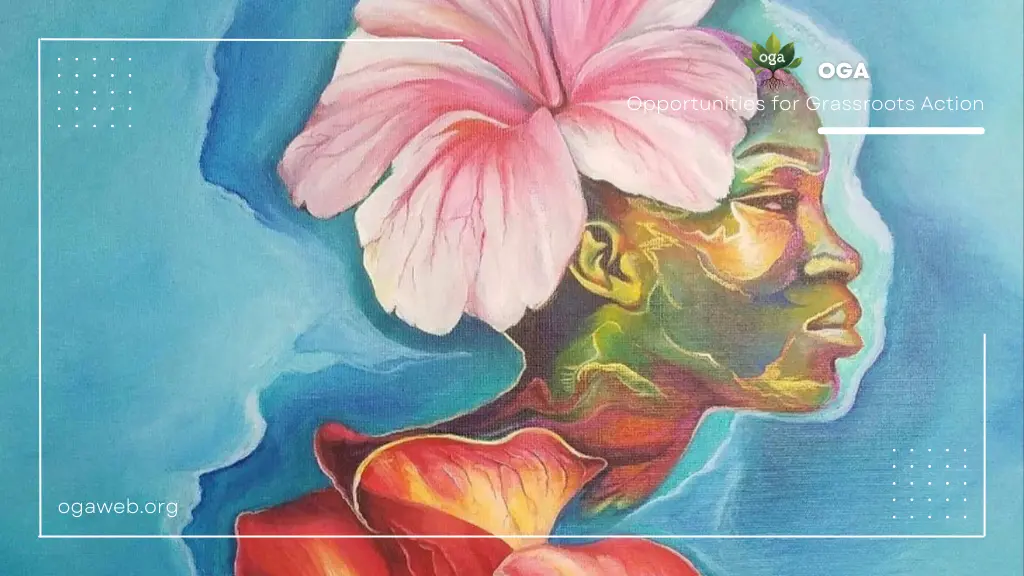
The image used alongside the original post, “Give me my flowers,” is the striking work of the gorgeous Trinidadian multimedia artist Nneka Jones. We strongly encourage you to learn more about her, who often explores themes of identity, social justice, and collective experience, by visiting her official website.