OGA Voices is a space created to amplify real stories told in the first person — stories from women, community organizers, frontline defenders, and people whose lived experiences carry truths the world needs to hear. Every OGA Voices article preserves the speaker’s words just as they were spoken: their pauses, their rhythm, their tone, and the emotional landscape behind each sentence.
The text that follows was transcribed from original Arabic audio messages sent by Asmaa.
We keep her words intact because her voice is not just testimony — it is memory, resistance, and a blueprint for change.
Listening to Asmaa is an act of recognition.
Sharing her voice is an act of solidarity.
Acting upon what her story reveals is a commitment to justice.
We invite you to read her words with the attention they deserve — and to stand with her work, her vision, and the communities she represents.
By: Asmaa Rashed
My name is Asmaa, and this is a part of my story.
My life has never been easy. It was shaped by challenges far greater than what most people who grow up in stable, peaceful societies can imagine — societies that respect the rights of women and girls, and where war and deep crises do not invade every corner of existence.
Early life and the impact of the Syrian conflict
I was born in a beautiful rural village, surrounded by nature and simple people. But beauty does not erase limits. Growing up as a girl in that environment meant that dreams had borders. The social norms, and the political system that ruled Syria for decades, did not offer women or girls any real space to claim their rights. Suffering was something we inherited. It was normalized — passed down from my grandmother, to my mother, to every woman I knew.
And still, even in that world, I held on to a quiet belief: that life could be different.
When the Syrian Revolution began in 2011, it sparked hope in many of us. For me — and for countless women and girls — it was the first chance to imagine rebuilding our lives with the basic rights we had been denied: the right to education, the right to live with dignity, the right not to be treated differently simply because we were rural girls rather than urban ones.
I dreamed of a day when girls could walk without fear, study without asking for permission, and write our futures with our own hands.
But the violence used against the revolution crushed those possibilities. Women stood on the front lines just like men. We protested, we were arrested, tortured, and killed just like men. We reached a point where we fought not for rights, but for one single thing — the right to stay alive.
When I became a refugee, I left everything behind — my home, my memories, everything familiar. The beginning was brutal. The pain in the camp surrounded us from every direction. But slowly, we learned to stand again. We learned to turn pain into action.
We did not wait for help. We collaborated with organizations, we built networks, and we tried to create something better for ourselves and for our children.
And then came my moment of awakening — the moment I understood that if I wanted to change my reality, I had to begin with myself. No one would do it for me.
Seeking refuge and finding a new purpose in education
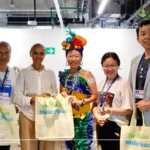
During that time, I heard about a training session for We Love Reading. Dr. Rana Dajanicame to Za’atari Camp, and her presence felt like a small window opening in a very dark room. Since I was a child, I loved reading and storytelling — so I told myself: this is my chance.
I attended the training despite everything I was going through. I was exhausted, recovering from a serious health issue, raising two little girls alone, and terrified of how society would judge me. Sitting in a mixed training of men and women was, for me, an act of rebellion. Even the idea of going to a training without a formal degree made me nervous.
But something in me insisted: take this step.
And I did.
When Dr. Rana began speaking, I felt as if she had come just for me. Even in a room of fifty people, her words felt personal — like a door opening. That day became the beginning of a journey that transformed everything.
The power of storytelling as a tool for healing and growth
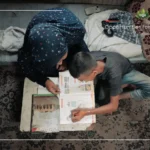
I started storytelling for children in Za’atari Camp in 2014. It was not easy at first — but it changed my life, the lives of the children, and the way my community viewed me. Children who used to draw tanks, planes, and scenes of war began drawing planets, snow, trees, flowers, and astronauts. Their imaginations shifted from survival to wonder.
I published their artwork in the camp magazine, and the stories spread little by little.
But then I noticed something painful: girls aged 11, 12, 13 stopped coming.
Some said they were “too old” for stories. Others were burdened with housework. And many were simply being pulled into the same cycle that had trapped generations of women before them.
So I created “Haya Lenakra — Let’s Read”, a program designed to empower adolescent girls, help them understand their reality, and encourage them to continue their education no matter the pressure. I didn’t want them to experience what I had — losing education because of early marriage or social norms.
My own daughter was one of those girls. Maybe that’s why the project mattered so deeply to me.
Overcoming cultural barriers to empower young girls
The sessions were incredibly successful. I funded them myself — through small savings, selling items, anything I could manage— to buy books, pens, and little supplies. But theimpact was huge: girls’ confidence grew, mothers became involved, and the community began to shift.
From 2014 to 2020, all this work led to the creation of the documentary “The Neighborhood Storyteller”, which tells my story and the story of the volunteering movement around “Haya Lenakra.” The film travelled far beyond the camp. It reached international platforms, won major awards — including the Women’s Award and Best Human Rights Film — and carried our voices to places where we never imagined we could be heard.
You can support the film’s impact campaign here.
We also launched “The One Million Asmaas”, an impact campaign inviting people to join the movement and support girls everywhere. The campaign reached far beyond our expectations.
The transformative journey from survival to global inspiration
Today, after three years in France — not because of the film, but because of my refugee process — I continue expanding this work. I am now part of the Home Storytellers Foundation, leading a global project inspired by the documentary to strengthen education for refugee girls.
Our goal: to provide safe spaces, tablets, specialized teachers, psychosocial support, and a network that surrounds girls with care — so they can become a generation capable of pursuing their dreams.
I believe education is the beginning of the road.
I believe in the power of one chance.
I believe that every girl deserves to write her own story.
And I believe that this story — my story — is only one among millions waiting to be told.
You can connect with me here:
Instagram
LinkedIn
Thank you for reading.
Support Asmaa’s Work
- Watch and share her documentary, The Neighborhood Storyteller
- Support the impact campaign
- Join or host a training with We Love Reading
We thank Asmaa for trusting us with her story and her voice. We honor the courage it takes to share your lived experience with the world.
At OGA, we are committed to finding ways to continue sharing these voices — no matter the format, no matter the medium, no matter the obstacles. Every story matters. Every voice deserves to be heard.