A field can be a school. A seed can carry memory. And a prayer can be a technology.
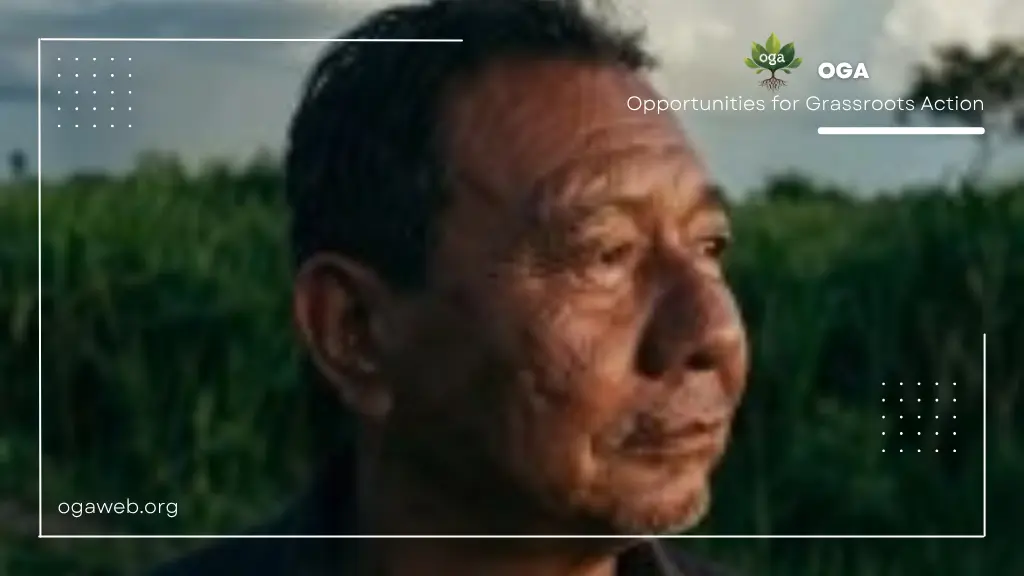
For Anastácio Peralta, a Guarani Kaiowá leader, teacher, farmer, and researcher, these things were never separate. Territory, spirituality, food, education, and good living have always walked together. For decades, he has been researching and sharing knowledge that makes us ask, honestly: what do we actually mean by science? By technology? By sustainability?
Where he speaks from
Anastácio was born in the Te’ýikue village in Caarapó, Mato Grosso do Sul, Brazil, and today lives in the tekoha Panambizinho. He grew up speaking his people’s language and learned to read and write at 37, through an adult education program. He hasn’t stopped since.Together with other leaders, he helped create Ara Vera, a high school level training program for Indigenous teachers that later gave rise to the Indigenous teaching degree Teko Arandu at the Federal University of Grande Dourados (UFGD). In Guarani, Teko Arandu means living with wisdom.
Spiritual technologies
In 2022, he completed his master’s degree in Education and Territoriality at UFGD with the research Spiritual Technologies: Prayer, Cultivated Fields, and Sustainability among the Kaiowá and Guarani. In it, Anastácio develops the concept of spiritual technologies to describe the relationships between human and non-human beings present in the rituals and ceremonies of planting, harvesting, and eating.He also reflects on seeds, tekoha, teko porã, food sovereignty, and Indigenous education.
This research is born from the territory and from lived experience, and it is also an important intellectual contribution to rethinking what technology means. For Anastácio, the knowledge of prayer leaders, the care for seeds and fields, the cycles of the land, and relationships with other beings are all part of a living knowledge system that sustains Kaiowá and Guarani existence. And he keeps researching. Today, in his doctorate, Anastácio is deepening questions that have run through his work for decades. It is this blend of lived experience, research, practice, and commitment to his people that gives his path such strength.
Seeds and joy
For Anastácio, caring for the land is also caring for joy. At a seed exchange gathering between Guarani Kaiowá and small farmers in Mato Grosso do Sul, he said that a good seed brings a good life, and that the arrival of seeds that had been missing brought new energy to the community. Then he added: “We are seeds too.”
Reforesting the mind
Now, his knowledge is reaching new audiences through Flowers of the Earth, one of the films in The Eternal Song series by Science and Nonduality (SAND). Anastácio is one of the film’s protagonists, which follows Guarani Kaiowá perspectives on territory, spirituality, retomada (land reclamation), and the inseparable relationship between life and the Earth.At the global launch on September 22, 2026, he joined activist and educator Sandra Procópio da Silva for the conversation Retomada: Reclaiming the Territory, Reforesting the Mind. It is far from an abstract topic for the Guarani Kaiowá, who continue to fight for the demarcation of their tekoha in Mato Grosso do Sul.
“Reforesting the mind” is one of the ideas Anastácio brought to that conversation, and it may be one of the best ways into his work. Rather than seeing sustainability as only an environmental issue, he invites us to look at the relationship between territory, knowledge, spirituality, and life, reminding us that there is no caring for the Earth while we keep destroying the knowledge and ways of life of those who keep these relationships alive.
Our part
It was an honor for OGA and Language for Justice to be part of this moment in partnership with SAND, providing interpretation for the international launch of Flowers of the Earth. Our role was to build a language bridge so Anastácio’s words could reach others without losing sight of who carries them and where they come from. When we spoke, Anastácio loved that OGA is called OGA. In Guarani, oga means home.
But this story is his. It is Anastácio who researches, plants, teaches, writes, speaks, questions, and keeps building knowledge rooted in his people and his territory. He reminds us that some of the answers we seek on sustainability, education, food sovereignty, and the future don’t need to be invented all over again. They already exist, they are practiced, and they continue to be passed on.
Maybe that’s why his work is so inspiring: it doesn’t speak of distant knowledge or an abstract idea of ancestry. It speaks of life, territory, seeds, spirituality, struggle, joy, continuity, and the future. For us, walking alongside him is also a call to responsibility: to listen closely, interpret with care, and help amplify a voice that already has so much to say.
Anastácio keeps researching, teaching, and doing. And we keep listening and learning.
Aguyjevete, Anastácio.
Want to learn more?
- Read and follow Anastácio’s work;
- Watch Flowers of the Earth and discover The Eternal Song. 50% of the series’ net proceeds go to Indigenous-led projects. Donations for the film also help SAND raise $10,000 to $15,000 for reforestation and traditional agriculture in Mato Grosso do Sul, as part of its reciprocity commitment;
- SAND has also translated Anastácio’s book into English, available as a PDF: Spiritual Technologies.
Photo credit: SAND